
The land came first
The Ozarks are one of those places that feel older than they look on a map. The hills are soft from a distance, the rivers are clear, and the whole region has that quiet, settled beauty that makes you think, “This place has been here a very long time.” And it has.
What makes the Ozarks interesting is that their history is not just one story. It is geology, Indigenous history, French naming, early settlement, Civil War damage, and modern conservation all stacked together in the same landscape.
Older than a typical mountain story
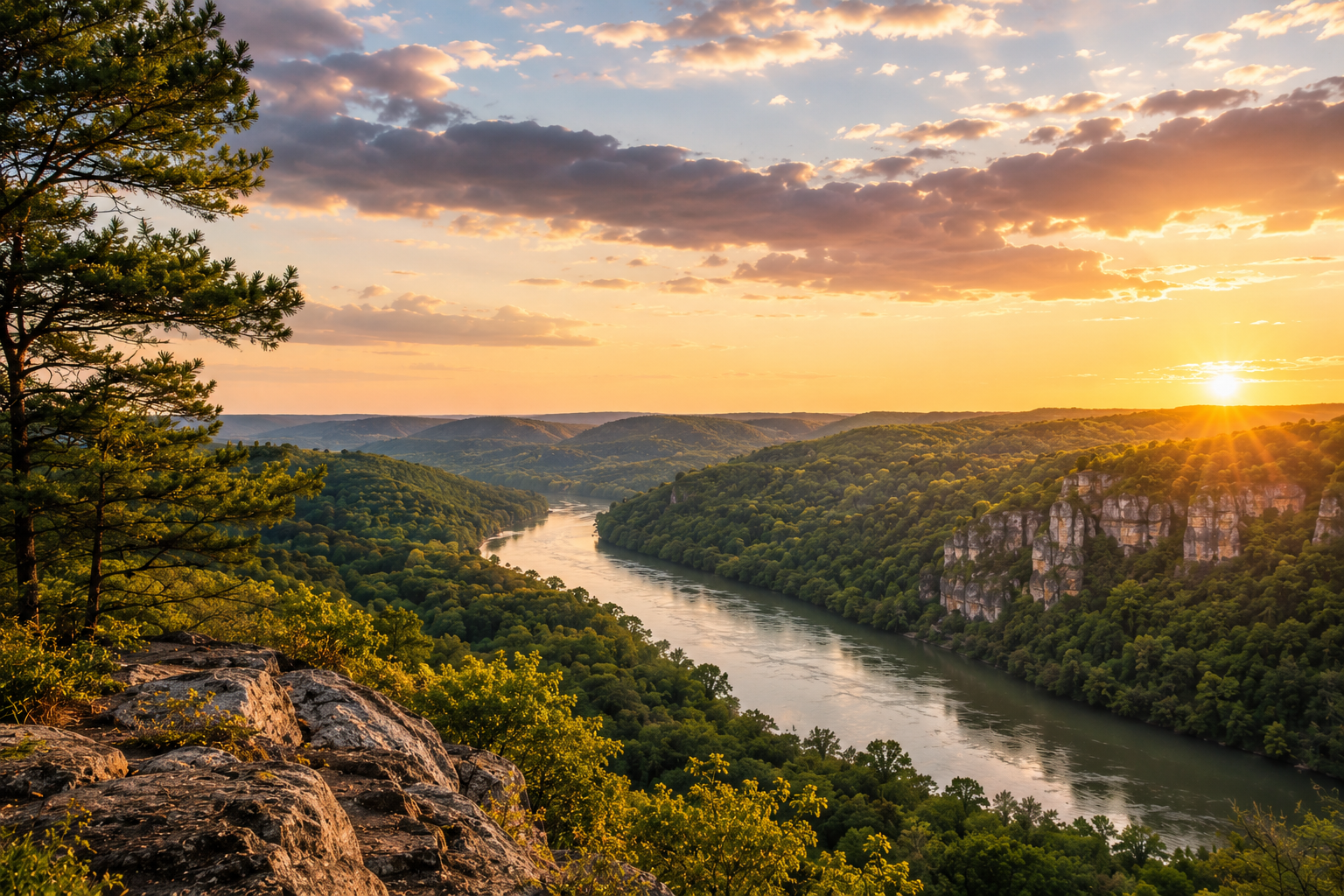
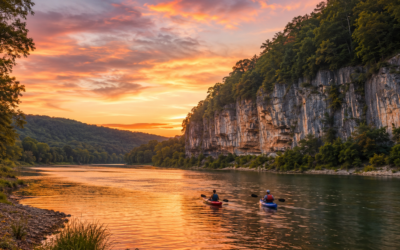
Even though people often call them the Ozark Mountains, the region is really better understood as a highland plateau that has been deeply carved by rivers and streams. Much of the Ozarks is made of very old sedimentary rock, and the landscape took shape through uplift and long erosion that created valleys, hollows, bluffs, and springs.
That is part of why the Ozarks feel different from a dramatic mountain chain like the Rockies. They are older, lower, more weathered, and more intimate. The beauty here comes from ridgelines, forested hollows, clear water, and a landscape that has been changing slowly for ages.
Long before the name Ozark
The human history of the region goes back thousands of years. Long before European explorers and traders arrived, Indigenous peoples lived, traveled, hunted, and built their lives here. The Ozarks were not empty land waiting to be discovered. They were already home.
Indigenous history matters first
By the time Europeans moved farther into the interior, the Osage were one of the primary nations connected to the region. That matters because any honest history of the Ozarks has to begin with Indigenous homelands, not with pioneer cabins or tourism.
How the region got its name
The exact origin of the word “Ozark” is still debated, but most explanations connect it to French influence in the region during the 1700s. Historians generally agree on that French connection even if the exact phrase behind the modern name is not fully settled.
Settlement changed everything
French influence came early, but American settlement after the War of 1812 changed the Ozarks much more dramatically. As settlers moved in, forests, valleys, and river corridors became places for farms, mills, roads, and new towns.
Outsiders helped define the region
Writers and travelers described the Ozarks to a broader audience in the early 1800s. Those accounts helped make the region better known, but they also helped create stereotypes about the Ozarks and the people who lived there.
The 1800s shaped the Ozark identity
As settlement spread, the Ozarks developed a reputation for small communities, rough terrain, and a culture shaped by distance from major cities. Fertile valleys and river corridors filled in first, while rougher uplands remained more thinly settled.
This is where the romantic version of the Ozarks starts to mix with the real one. There were homesteads, mills, and river communities, but there was also hardship, isolation, and a lot of outsider misunderstanding.
The Civil War left deep marks here
The Ozarks were heavily affected by the Civil War. The region saw major campaigns, divided loyalties, raids, and violence that reached ordinary households. In many places, the war was not distant at all. It showed up in roads, farms, and daily life.
The twentieth century brought tourism and protection
In the 1900s, roads, recreation, dams, and park development made the Ozarks more accessible. Tourism grew, lake culture expanded in some areas, and scenic travel became a bigger part of how outsiders experienced the region.
Conservation became part of the story
At the same time, conservation became one of the most important modern chapters in Ozark history. Protected rivers, parks, and public lands helped preserve some of the most beautiful parts of the region for future generations.
Why this history still matters
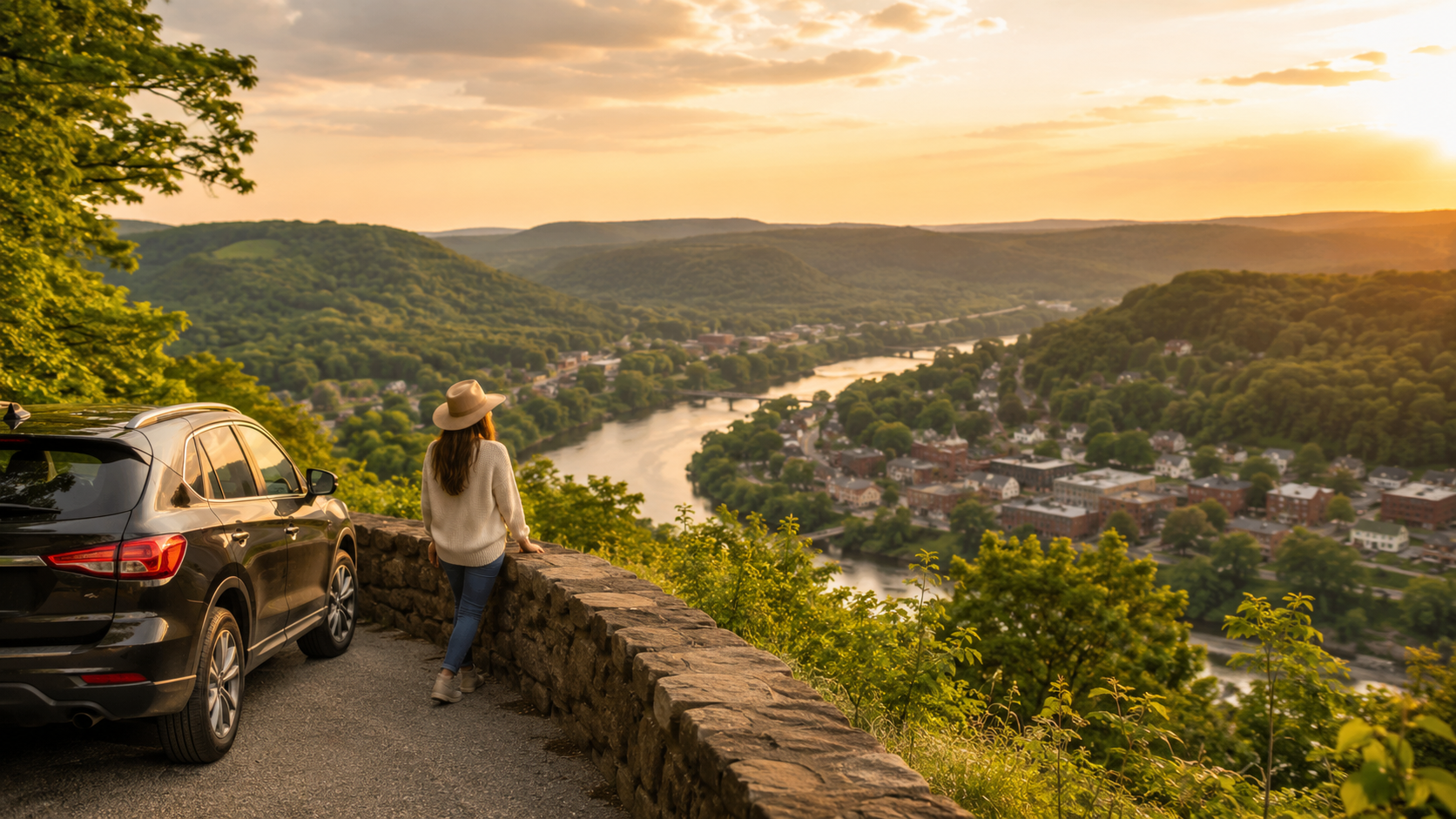
When you travel through the Ozarks now, you are not just looking at pretty hills. You are looking at ancient geology, Indigenous homelands, settlement routes, Civil War scars, and generations of change layered into one place.
That is part of what makes the region feel so deep. The Ozarks do not feel polished. They feel lived in, shaped over time, and more meaningful once you know the story behind the landscape.